

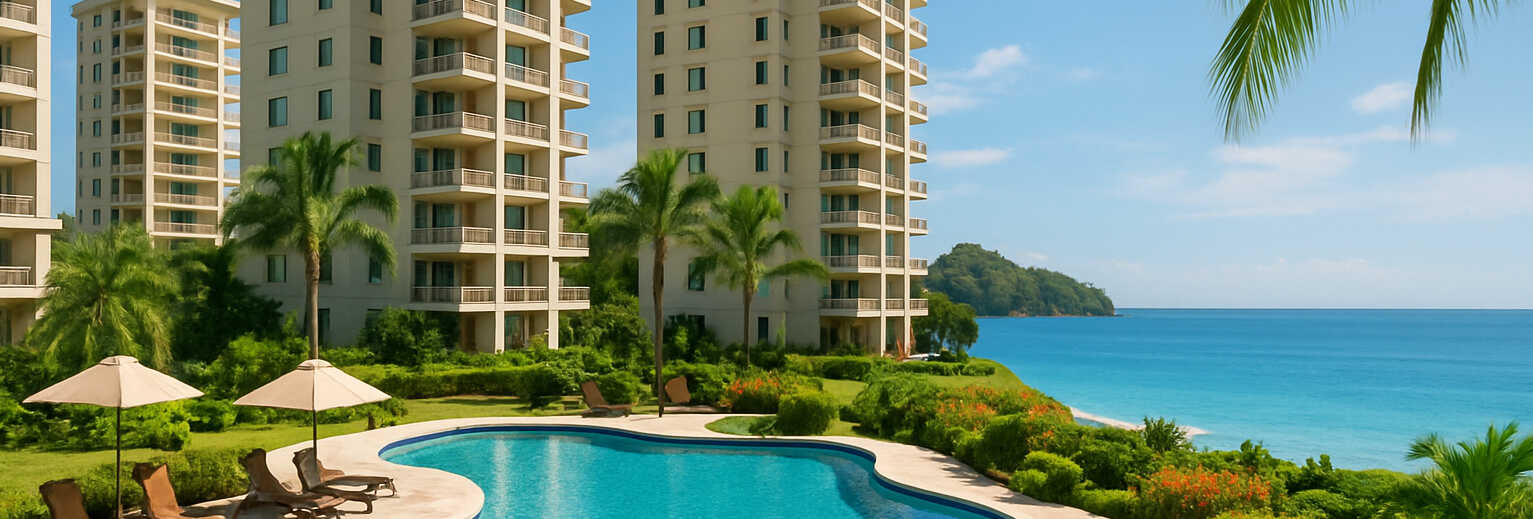
Condominiums in Costa Rica: HOA Fees, Pros & Cons for Buyers
First and foremost, Costa Rica recognizes two main condominium formats: horizontal (detached homes or lots within a gated master plan) and vertical (a building containing two or more units). This guide focuses on vertical condominiums—the apartments and condo towers most buyers picture when they think about ocean-view living in Guanacaste.
Condos are popular with expats, retirees, and investors because they offer lock-and-leave convenience, solid on-site amenities, and walkable locations near beaches and services. They also operate under a specific legal and financial framework that’s different from owning a freestanding home. Below you’ll find a practical breakdown of what HOA fees cover, how condo associations work, the step-by-step purchase flow, plus the real pros and cons for everyday owners.
Why Condos Work for Many Buyers
- Turn-key living: exterior maintenance and common areas are handled by the association.
- Security: staffed gates, cameras, and controlled access—ideal for part-time residents and snowbirds.
- Amenities: pools, gyms, BBQ ranchos, elevators, landscaped gardens—sometimes beach clubs and co-working lounges.
- Lower insurance costs: you insure the interior contents and improvements; the building shell is typically covered by the HOA’s master policy.
- Rental flexibility: many buildings allow short-term rentals (always confirm rules first).
- Location: close to beaches, restaurants, shops, and tour operators—often walkable.
What to Watch Out For
- Monthly HOA dues: increase your carrying costs and can be adjusted annually by the owners’ assembly.
- Rules & restrictions: bylaws may limit pets, rentals, smoking, grills, window treatments, or renovations.
- Special assessments: one-time fees for major repairs or upgrades.
- Neighbor dynamics: shared walls and common areas mean more coordination—and sometimes disagreements.
- Less privacy: compared to a detached home with its own yard.
Understanding HOA Fees in Costa Rica
HOA fees, or cuotas de mantenimiento, are monthly dues that fund the operation, maintenance, and future reserves of the condominium. These fees are usually determined by each unit’s percentage share (based on construction size and other factors) and billed as a flat monthly amount.
What HOA Fees Typically Include
- 24/7 security personnel, gate control, and CCTV monitoring
- Pool, garden, and common-area cleaning and maintenance
- Common-area utilities (water, electricity), and in some projects, trash collection
- Building and liability insurance for common structures
- Elevator service contracts and fire safety systems
- On-site administration, accounting, and professional property management
- Reserve funds for capital repairs (paint, roofs, pumps, generators, elevators)
Typical Fee Ranges (Illustrative)
- Smaller projects / limited amenities: US$100–$250/month
- Mid-range gated buildings with pool & BBQ rancho: US$250–$475/month
- Luxury ocean-view condos: US$600–$1,000+/month
- Ultra-luxury resort residences: US$3,500+/month
Note: actual fees vary by size, amenity package, staffing levels, and the building’s reserve strategy. Always ask for the latest budget and minutes before you commit.
How Fees Are Set—and When They Change
Each year the administrator presents a proposed operating budget to the owners’ assembly. Owners vote to approve the budget and associated dues. Major changes to services, staffing, or capital projects (e.g., repainting the building or replacing an elevator) can trigger increases or special assessments.
Reading the Financials Like a Pro
- Operating budget: compare current vs. prior year; look for outsized line items (e.g., security, utilities).
- Reserve fund: check contribution levels and upcoming projects; a thin reserve can signal future assessments.
- Accounts receivable: how many owners are delinquent and for how long?
- Meeting minutes: scan the last 12 months for disputes, lawsuits, or planned capital works.
Legal & Ownership Structure
Costa Rican condominiums are organized under the country’s property and condominium regulations. As a unit owner, you hold title to your individual unit and an undivided percentage of the common elements (hallways, structure, pool, grounds). The community is governed by a bylaw document (reglamento de condominio) and administered by an elected board and/or professional administrator. Owners vote in the assembly, typically in proportion to each unit’s share.
Key legal points to keep in mind:
- Bylaws control: rentals, pet rules, architectural standards, parking, noise, and the process for fines.
- Voting & quorums: major decisions—capital improvements, changes to rules—require specific quorums and vote thresholds.
- Insurance: the HOA insures common property; you typically insure interiors and contents.
- Collections: unpaid fees accrue penalties and can be pursued with liens or legal action.
Step-by-Step: Buying a Condo in Costa Rica
- Offer & Option: Submit a written offer (often via an Option to Purchase). Spell out price, timelines, contingencies, and what’s included (appliances, furniture, parking, storage).
- Deposit to Escrow: After acceptance, place a typical 5–10% deposit in a licensed escrow account.
- Due Diligence by your Attorney: title search, liens, review of bylaws, financials, meeting minutes, municipal and HOA status, utilities, and any rental restrictions.
- Finalize Closing Docs: deed drafted by a notary public (attorney). If buying in a corporation, verify shareholders and powers of attorney.
- Closing & Registration: sign before the notary, transfer funds through escrow, and record the deed at the National Registry.
- Post-Closing: pay transfer tax (currently 1.5%) plus stamps/fees; update municipal property tax account and HOA records.
Closing costs note: Buyers typically budget for transfer tax, stamps, escrow, and legal/notary fees. Exact totals vary by structure and purchase method, so request a line-item estimate from your attorney before you waive contingencies.
For broader context on timelines and negotiation strategy, see our guide to buying property in Costa Rica.
Budgeting Beyond the Purchase Price
Recurring Costs
- HOA dues: as outlined above; confirm any scheduled increases.
- Insurance: contents policy for your unit; HOAs usually carry the building policy.
- Utilities: electricity, water, internet—verify accounts are properly assigned.
- Property taxes: municipal property tax is assessed annually; check that the seller is current.
- Replacement reserves: if the HOA’s reserve is thin, plan a personal reserve for interior items (A/C, appliances).
Curious how these recurring costs affect your overall spend? Cross-check with our guide to the true cost of living in Costa Rica.
Rental Income Potential
Many Guanacaste condos perform well on short-term rental platforms due to proximity to Liberia International Airport, strong tourism, and beach-town walkability. In hubs like Playas del Coco and Tamarindo, well-managed units can see healthy occupancy during high season, with nightly rates based on size, view, and amenity level. Always confirm that short-term rentals are allowed in the bylaws and whether management requires guest registration, noise quiet hours, or minimum-stay rules.
Property Management
- On-site vs. third-party: Some HOAs permit any licensed manager; others restrict to an approved list.
- Typical services: marketing, bookings, guest communications, check-in/out, cleaning, minor maintenance.
- Owner obligations: local tax registration and collection/remittance of applicable lodging taxes; compliance with HOA rules.
Guanacaste Condo Hotspots
- Playas del Coco: broad inventory, value pricing, and excellent access to tours and services—a perennial rental favorite.
- Playa Hermosa: quieter and more upscale feel, with hillside buildings offering panoramic ocean views.
- Tamarindo: vibrant surf town energy; walkable to restaurants and beach—strong draw for weekly stays.
- Reserva Conchal & Hacienda Pinilla: master-planned resorts with golf, beach clubs, trails, and top-tier amenities.
Key Due Diligence & Questions to Ask
- Read the full bylaws (reglamento de condominio)—highlight pet, rental, and renovation clauses.
- Request 12 months of financial statements, current budget, and meeting minutes.
- Ask about special assessments—past, current, and planned (e.g., repainting, elevator replacement).
- Verify that property taxes and HOA dues for the unit are paid to date.
- Confirm water and electricity service are legally registered and transferable to the unit/corporation.
- Check parking and storage—exclusive use, deeded, or assigned? Any restrictions for EV chargers?
- Clarify rental policies—minimum nights, guest registration, quiet hours, and any manager restrictions.
- Inspect building systems (pumps, backup generators, elevators) and review maintenance logs.
Condo vs. Single-Family Home: Quick Comparison
| Factor | Condo | Single-Family Home |
|---|---|---|
| Maintenance | Handled by HOA; predictable | Owner-managed; variable |
| HOA Rules | Yes—bylaws & fines | Often none or lighter |
| Privacy | Shared walls/common areas | Higher privacy & space |
| Location | Walkable, close to services | Broader locations, larger lots |
| Insurance | Generally lower (interior only) | Full structure & contents |
| Rental Demand | Often strong in beach towns | Varies with location & size |
Mid-Article Help: Talk to a Local Expert
Thinking about a condo in Guanacaste? We help buyers evaluate HOA health, rental rules, and long-term costs before you commit. Tell us what you’re looking for and we’ll send a short list that fits your goals—no spam, just practical options.
Start your condo search with our buyer’s guide or get relocation tips for your move.
Frequently Asked Questions
Can foreigners own a condominium in Costa Rica?
Yes. Foreigners have the same ownership rights as citizens. You can hold title personally or through a Costa Rican corporation; discuss pros and cons of each structure with your attorney.
What happens if an owner stops paying HOA dues?
Delinquent accounts accrue interest and penalties. Associations can restrict access to amenities and ultimately pursue legal collection or liens to recover unpaid amounts per the bylaws.
Do all condos allow short-term rentals?
No. Some buildings permit nightly rentals; others require 30-day minimums or ban them altogether. Always verify the rental policy in the bylaws and the minutes before you buy.
Are pets allowed?
Many HOAs allow pets with size/breed limits and leash/common-area rules. Check the exact clause and any registration requirements.
How are HOA fee increases decided?
Through the annual budget process and owners’ assembly vote. Review past budgets to understand the building’s cost trend and reserve strategy.
What insurance do I need?
The HOA’s master policy generally covers the building structure and common areas. Owners typically carry an interior “contents & improvements” policy for appliances, finishes, and liability inside the unit.
Can I renovate my condo?
Yes, but interior works often require notice, approved plans for structural changes, quiet-hours compliance, and adherence to materials/appearance standards set by the bylaws.
What closing costs should I expect?
Plan for the 1.5% transfer tax, legal/notary fees, stamps, escrow, and due-diligence costs. Ask your attorney for a written estimate tied to your specific deal structure before removing contingencies.
Next Steps
If a low-maintenance beach life sounds right, a condominium can be a smart fit—especially in Guanacaste’s established communities. Your best protection is a clear read on the bylaws and the building’s financial health before you go firm on your offer.
- See our full primer on buying property in Costa Rica.
- Budget realistically with our guide to the true cost of living.
- Planning a move? Don’t miss our moving and relocation guide.
- Considering Coco? Explore our local insights: Living in Playas del Coco.